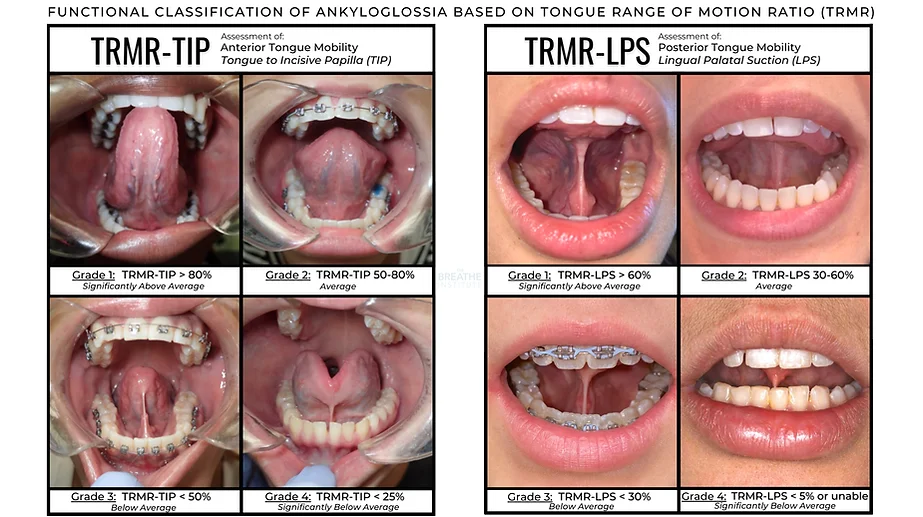
An oral tie, also known as a frenulum, is a small fold of tissue that connects two structures in the mouth. They are found in several locations in the mouth, including the tongue, lips, and cheeks.
In some cases, an oral tie can cause problems with speech, feeding, and oral hygiene. When the frenulum is too tight or short, it can restrict movement and cause discomfort or difficulty in performing oral functions.
Oral ties can be found in several locations in the mouth, including:
What is an oral tie?
An oral tie, also known as a frenulum, is a small fold of tissue that connects two structures in the mouth. They are found in several locations in the mouth, including the tongue, lips, and cheeks.
In some cases, an oral tie can cause problems with speech, feeding, and oral hygiene. When the frenulum is too tight or short, it can restrict movement and cause discomfort or difficulty in performing oral functions.
Oral ties can be found in several locations in the mouth, including:
TONGUE TIE
A condition where the lingual frenulum, which connects the tongue to the floor of the mouth, is too short or tight.
TONGUE TIE
A condition where the lingual frenulum, which connects the tongue to the floor of the mouth, is too short or tight.
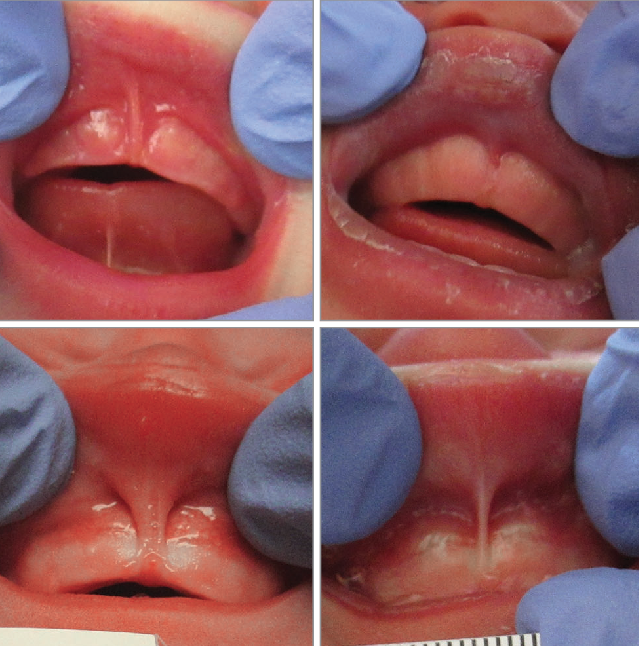
LIP TIE
A condition where the labial frenulum, which connects the upper or lower lip to the gums, is too tight or thick.
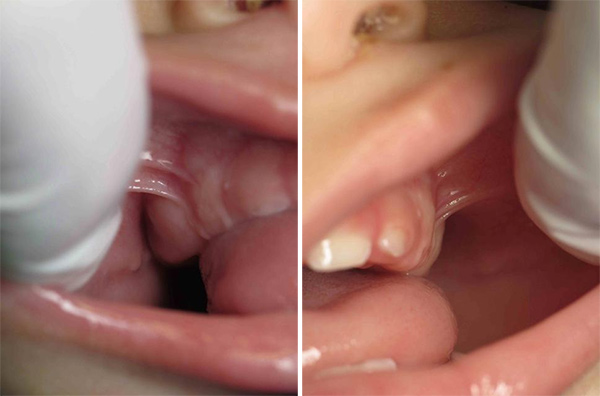
CHEEK AND BUCCAL TIE
A condition where the buccal frenulum, which connects the inside of the cheek to the gums, is too tight or thick.
CHEEK AND BUCCAL TIE
A condition where the buccal frenulum, which connects the inside of the cheek to the gums, is too tight or thick.
TREATMENT
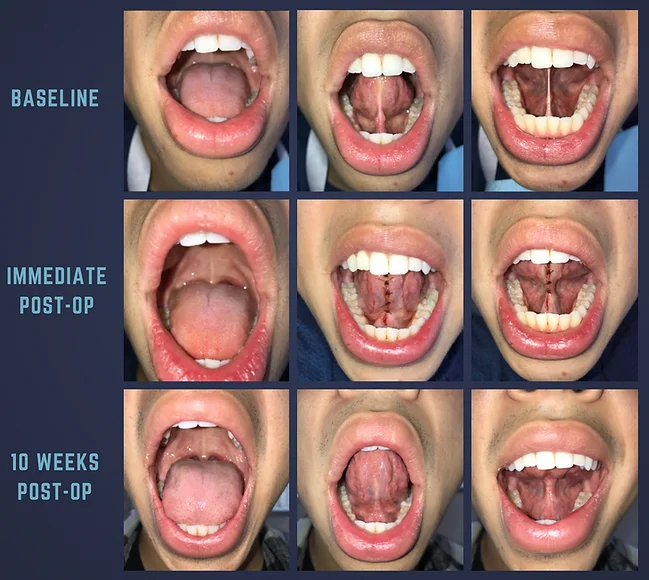
Case Study: Grade 3 tongue-tie released to Grade 1 <BR>(>80% mobility)
Proper diagnosis
A frenectomy is a procedure that releases tension in the frenulum to improve oral function. A thorough evaluation helps determine whether a frenectomy is necessary. A comprehensive examination can identify the presence of an oral tie and determine the most appropriate course of treatment.
During the examination, signs of restricted movement are evaluated, including difficulty moving the tongue or lips. Specialized instruments, such as a tongue depressor or mirror, may be used to assess the oral tissues. A review of symptoms, such as difficulty breastfeeding, eating, or speaking, may also be part of the evaluation.
If an oral tie is identified, a frenectomy may be recommended to release the frenulum and improve oral function. The procedure is typically performed in the office and may be completed using either laser or traditional surgical techniques. A thorough diagnosis helps ensure that treatment is recommended only when it is appropriate to improve oral function.
Is your child a candidate for an frenectomy? Call us today to find out